
The Bhagavad Gita (500–300 BCE), an ancient Sanskrit epic, narrates a profound dialogue between Prince Arjuna and the deity Krishna on the battlefield. As an archer, Arjuna faces an ethical dilemma, struggling with doubt, fear, and hesitation. Krishna, his charioteer, guides him towards self-discovery and enlightenment. This 700-verse poem, translated into countless languages, offers timeless wisdom on righteous action, even in the face of adversity.
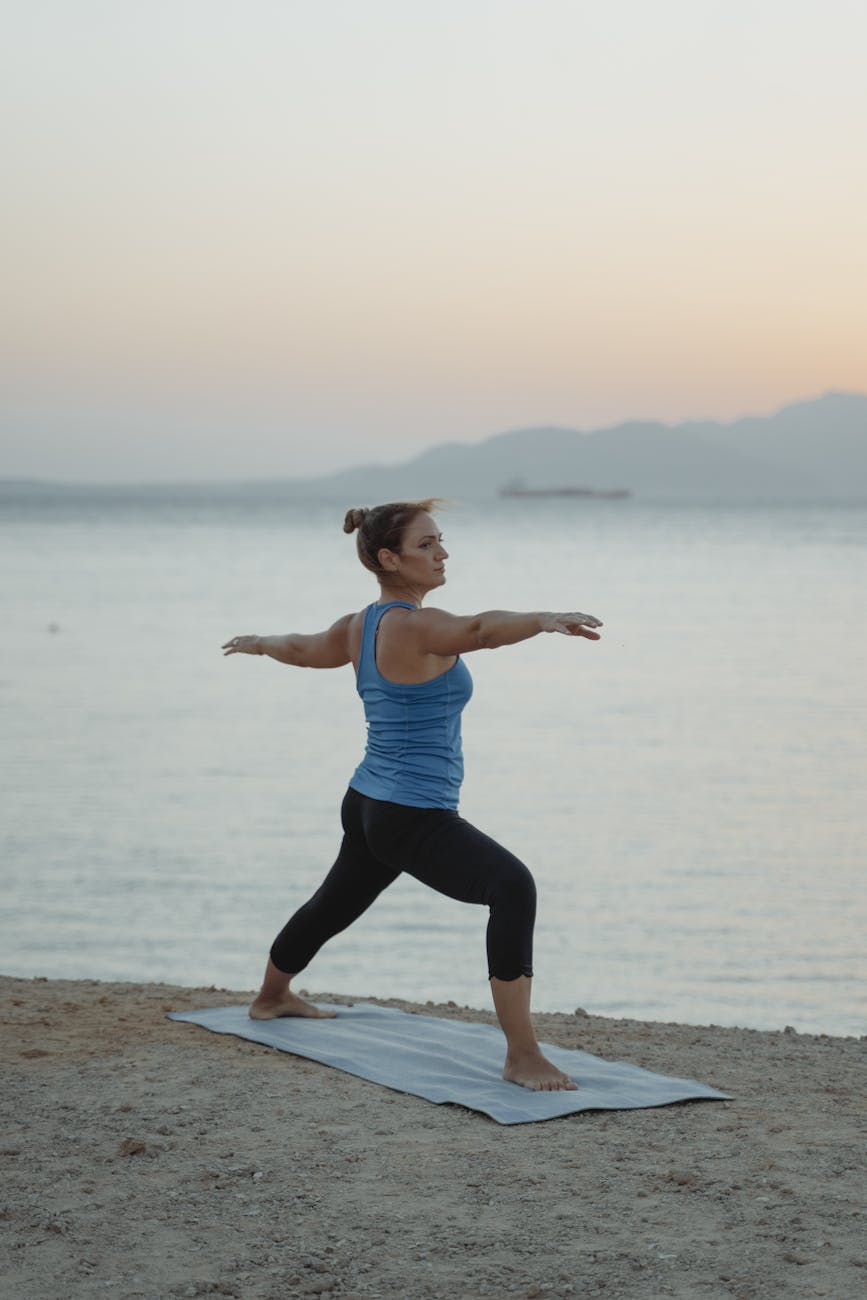
Arjuna’s battlefield serves as a metaphor for our lives, where we confront personal struggles and uncertainties. Yoga, particularly the Warrior II pose (Virabhadrasana II), embodies this metaphor. The pose mirrors an archer’s strong, steady stance, requiring focus, strength, and courage—qualities essential not just in yoga but in daily life. By mastering this dynamic balance on the mat, we learn to carry the same mindfulness into our everyday experiences. Just like Arjuna, we can cultivate presence and respond to life’s challenges with clarity despite doubt, with courage despite fear, and with discernment despite indecision.

How to Practice Warrior II
Warrior II is best performed following Extended Triangle Pose or Warrior I, and can be followed by Extended Side Angle Pose for a seamless flow.
- Begin in Mountain Pose on a stable, flat surface.
- Step your feet wide apart (approximately 1.3–1.5 meters) and raise your arms parallel to the floor.
- Turn your right foot outward and align your left foot slightly inward.
- Align your front knee so it points over the small toe, ensuring it doesn’t extend past the ankle.
- Engage your thigh muscles, lifting the kneecap while keeping the back leg straight.
- Stretch forward and backward simultaneously, keeping the torso upright and centered.
- Gaze over your front fingertips, maintaining a neutral neck position.
- Hold for three to five breaths, then repeat on the other side.
Benefits of Warrior II
This powerful pose strengthens the leg muscles, including the quadriceps and hamstrings, while stretching the inner thighs. It enhances hip mobility, builds endurance, and fosters mental resilience. The dual action of stretching forward and backward promotes balance, both physically and emotionally.
Precautions and Modifications
- Avoid Warrior II if you experience swollen or painful knees or are over six months pregnant.
- If you struggle with balance, practice with your back against a wall.
- During recovery from illness, support yourself to prevent instability.
- Never force the knee beyond its natural range to avoid injury.
Mindful Exploration: The Metaphor of Balance
At first glance, Warrior II seems to involve forward motion, but its essence lies in maintaining stillness within movement. To find equilibrium, imagine reaching equally forward into the future and backward into the past, keeping the present moment as your focus. This balance—between past and future, strength and softness, action and awareness—is at the heart of yoga.
Through Warrior II, we cultivate the ability to stay grounded in the present, embrace challenges with resilience, and move forward with clarity—both on the mat and in life.
References
Easwaran, E. (2007). The Bhagavad Gita. Nilgiri Press. Feuerstein, G. (2003). The deeper dimension of yoga: Theory and practice. Shambhala Publications. Iyengar, B. K. S. (2005). Light on life: The yoga journey to wholeness, inner peace, and ultimate freedom. Rodale.
Lasater, J. (2001). Yoga: 30 essential poses: Beginner’s guide to building strength, balance, and inner peace. Rodmell Press.
Leave a Reply